

From Wasted Space to Purposeful Living: Where a Murphy Bed Makes the Biggest Impact
Walk through most homes and you’ll find at least one space that isn’t living up to its potential. It might look fine on the surface, but functionally it’s underperforming—used occasionally, poorly organized, or simply unclear in purpose.
That’s where a Murphy bed becomes more than just a piece of furniture. It becomes a strategy.
Instead of accepting wasted square footage, you can convert it into something intentional—something that supports how you actually live day to day. The key is knowing where a Murphy bed will make the biggest impact.
The Real Problem: Rooms That Don’t Earn Their Keep
Most underused spaces fall into a predictable pattern. They were designed with a single purpose in mind, but real life doesn’t use them that way.
A guest room sounds practical—until you realize it sits empty most of the year. A home office works well—until someone needs a place to stay. A den or bonus room feels like a luxury—until it becomes a catch-all for everything without a home.
The issue isn’t the room itself. It’s the lack of flexibility.
A Murphy bed solves that by allowing one space to serve multiple purposes—without compromise.
Space #1: The “Occasionally Used” Guest Room
This is the most common example—and often the most inefficient use of space in a home.
A traditional guest room dedicates an entire area to a bed that might only be used a handful of times each year. The rest of the time, it sits untouched.
How a Murphy Bed Changes the Equation
With a Murphy bed, that same room can function as something useful every single day—while still being ready for guests when needed.
Instead of a static space, it becomes adaptable.
What This Space Can Become
When the bed is closed, the room can easily function as:
- A home office with room to move and focus
- A hobby or craft room with usable floor space
- A reading or relaxation space that actually gets used
When guests arrive, the transition is simple. The bed folds down, and the room does its secondary job—without sacrificing comfort.
Space #2: The Home Office That Needs to Do More
Home offices have become essential—but they often come with a limitation. They’re designed for one person, one function, and one schedule.
That works—until life demands more flexibility.
The Common Challenge
You need a dedicated workspace, but you also need to accommodate overnight guests. Without a Murphy bed, that usually means compromise—either giving up your office or squeezing a bed into a space that wasn’t designed for it.
The Smarter Solution
A Murphy bed allows the office to stay an office first. The room remains clean, functional, and focused during the day. At night—or when needed—it becomes a comfortable guest space.
This is one of the most practical upgrades you can make because it solves a real, recurring problem without requiring additional square footage.
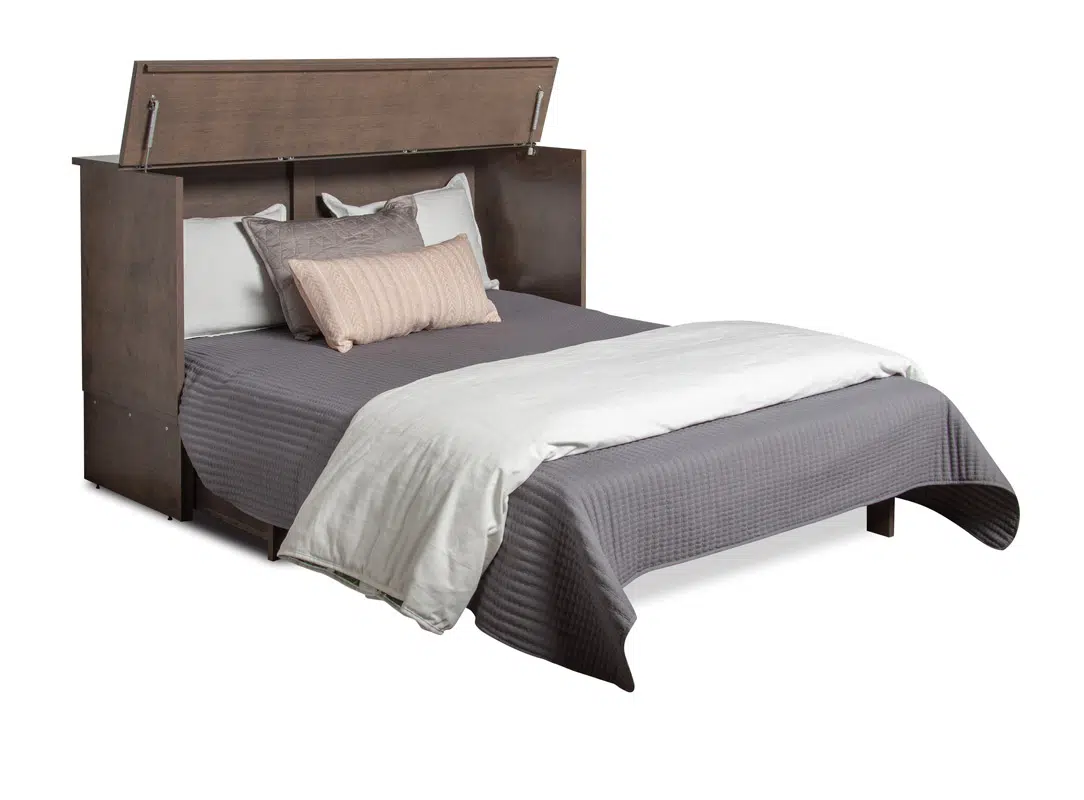
Space #3: The Undefined Bonus Room or Den
Every home seems to have one of these. It’s not quite a living room, not quite a bedroom, and not quite anything specific.
Over time, it becomes a mix of storage, occasional seating, and unused potential.
Why This Space Matters
This is often the biggest opportunity in the home. Because it doesn’t have a fixed identity, it’s the easiest to redefine.
Turning It Into a High-Value Space
A Murphy bed gives the room purpose without locking it into a single use.
With the right setup, it can function as:
- A media room or lounge area
- A playroom that can evolve as needs change
- A flexible space that supports both daily living and overnight guests
Instead of being a “nice to have” space, it becomes one of the most useful rooms in the house.
Space #4: The Oversized Bedroom with Unused Square Footage
Sometimes the issue isn’t a lack of space—it’s too much of it being used inefficiently.
Large bedrooms often have open areas that don’t serve a clear function. Furniture gets spaced out, but the room still feels underutilized.
A Different Way to Think About It
Adding a Murphy bed to a secondary wall can transform part of the room into a dual-purpose zone.
This works especially well in homes where:
- You want to accommodate guests without dedicating a full room
- You need additional flexibility but don’t want to remodel
- You’re trying to make better use of existing square footage
It’s a subtle shift, but it can significantly increase how functional the space feels.
What All These Spaces Have in Common
At first glance, these rooms seem very different. But they share the same underlying issue: they’re designed for limited use.
A Murphy bed introduces flexibility, which changes everything.
Instead of choosing between function and comfort, you get both. Instead of dedicating space to a single purpose, you allow it to adapt.
That’s what makes the impact so noticeable.
How to Identify the Best Opportunity in Your Home
If you’re not sure where a Murphy bed would make the biggest difference, start by asking a few straightforward questions:
- Which room do you use the least—but wish you could use more?
- Where do you feel like space is being wasted?
- What situation keeps coming up that your current layout doesn’t handle well?
The answers usually point directly to the right space.
This isn’t about forcing a Murphy bed into your home. It’s about recognizing where flexibility would solve a real problem.
Why This Upgrade Works Long-Term
Unlike trend-based updates, this is a structural improvement in how your home functions.
You’re not just changing how a room looks—you’re changing what it can do.
That has lasting value. It makes your home more adaptable, more efficient, and more aligned with how people actually live today.
And as needs change over time, that flexibility becomes even more important.
Final Thoughts: Make Your Space Work for You
Most homes don’t need more square footage—they need better use of the space they already have.
A Murphy bed is one of the simplest ways to achieve that. It turns underused rooms into purposeful ones, without requiring major renovation or disruption.
If you’re looking at your home this spring and thinking, this space could be better, you’re probably right.
The next step isn’t to add more—it’s to make what you already have work smarter.