

Guest-Ready by Summer: How to Create a Multi-Use Room That Works Year-Round
Summer has a way of exposing the weak spots in a home.
Family drops in. Friends extend weekend visits. College students come home. Out-of-town guests assume you have “a spare room.” Suddenly, the office with stacked boxes or the workout room with a treadmill and no floor space becomes a problem.
If you’ve ever scrambled to clear a room the night before someone arrives, you already know the truth: a space that only works for one purpose isn’t flexible enough for real life.
The good news? You don’t need to add square footage to become guest-ready by summer. You need to rethink how one room functions 365 days a year.
A thoughtfully designed multi-use room—anchored by a custom Murphy bed—can solve the guest dilemma without sacrificing daily functionality.
Let’s walk through how to do it right.
The Modern Home Needs Flexibility, Not Extra Rooms
In today’s homes, every square foot needs to earn its keep.
Spare bedrooms have become:
- Home offices
- Fitness spaces
- Craft or hobby rooms
- Homework stations
- Media rooms
And for most of the year, those uses make perfect sense. But when summer approaches and guests start booking flights, the room’s single-purpose design creates stress.
The goal isn’t to create a “guest room” that sits unused 10 months a year. The goal is to create a room that works beautifully for your daily life—and seamlessly converts when needed.
That distinction changes everything.
Why Sofa Sleepers Aren’t the Solution
When homeowners think “guest-ready,” many default to a pull-out couch.
On paper, it seems practical. In reality, it often creates new problems.
Sofa sleepers typically come with:
- Thin, uncomfortable mattresses
- Bulky frames that dominate the room
- Awkward setup mechanisms
- Limited lifespan compared to traditional beds
Your guests deserve more than a metal bar pressing into their backs. And you deserve a room that doesn’t feel crowded 365 days a year just to accommodate occasional visits.
A true Murphy bed solves both issues.
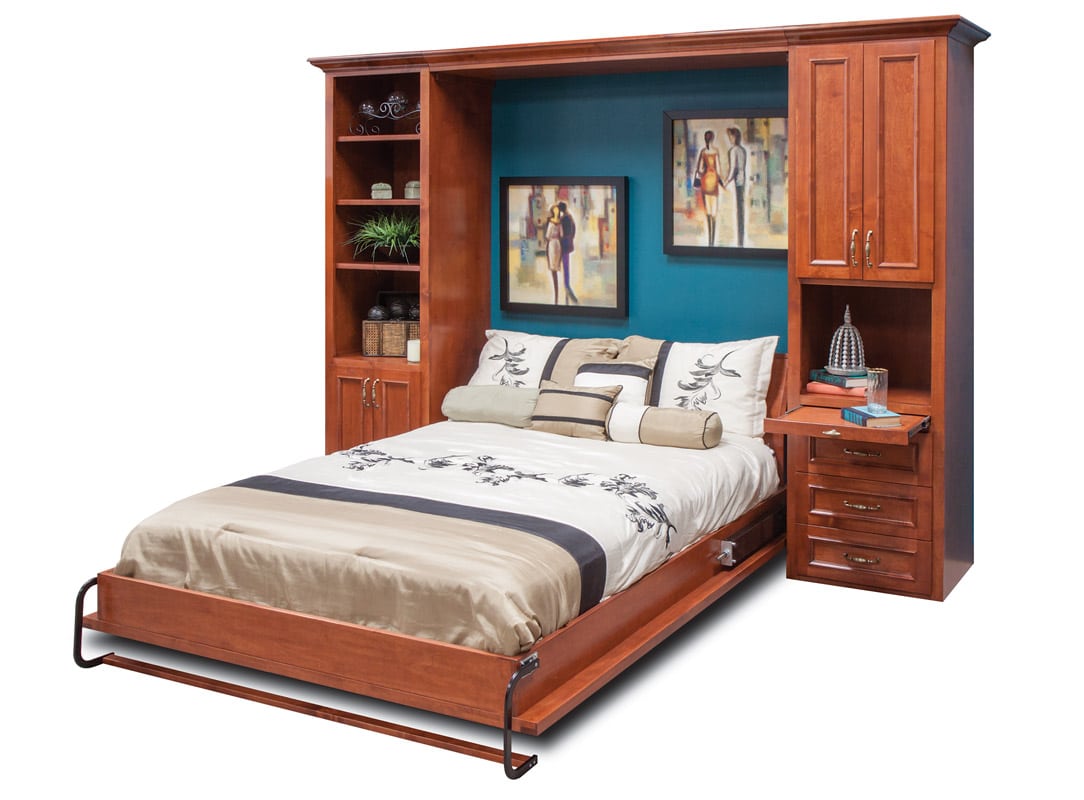
Unlike a sofa sleeper, a wall bed uses a real mattress. It folds vertically or horizontally into custom cabinetry, disappearing into a streamlined design that looks intentional—not temporary.
During the day, the room functions fully. At night, it becomes a legitimate bedroom.
That’s real flexibility.
Designing a Room That Works Year-Round
Before choosing furniture, step back and ask: What is this room’s primary purpose?
If it’s a home office, design it as a productive workspace first. If it’s a fitness room, prioritize open floor space and storage. If it’s a creative studio, think about light and accessibility.
Then integrate a Murphy bed in a way that supports—not compromises—that main function.
Here are smart design strategies that keep the room balanced:
- Choose built-in cabinetry that incorporates shelves or a desk alongside the bed.
- Use vertical space efficiently with overhead storage.
- Select finishes that match the rest of your home for seamless integration.
- Consider lighting placement so both work mode and sleep mode feel comfortable.
The key is intentional planning. A custom wall bed isn’t an afterthought—it’s part of the architecture.
The Power of the Instant Conversion
There’s something powerful about transformation.
A room that shifts from office to bedroom in seconds eliminates friction. No dragging mattresses from closets. No clearing piles of paperwork at midnight. No inflatable beds deflating at 3 a.m.
When summer guests arrive, you simply pull the bed down.
That ease changes the emotional tone of hosting. Instead of feeling burdened, you feel prepared.
And when guests leave, the bed folds away just as easily—restoring your workspace or hobby area without chaos.
That’s what makes a Murphy bed a strategic solution rather than a temporary fix.
Small Rooms, Big Impact
One of the biggest myths about multi-use rooms is that you need a large space to make it work.
In reality, Murphy beds are particularly effective in smaller rooms.
Because the bed stores vertically against the wall, the floor space remains open during the day. That means:
- A 10×10 room can function comfortably as an office.
- A bonus room can serve as both gym and guest space.
- Even a den or flex space can convert into sleeping quarters.
Instead of a bed permanently occupying 30–40 square feet, that space becomes usable every single day.
In high-value housing markets like Southern California, maximizing usable space without construction is smart planning.
Built-In Quality vs. Temporary Furniture
Not all wall beds are created equal.
Big-box options may seem appealing at first glance, but they often lack structural stability, design integration, and long-term durability.
A professionally designed Murphy bed offers:
- Secure anchoring into wall studs
- Lift mechanisms engineered for repeated daily use
- Custom cabinetry tailored to your room’s dimensions
- Finish options that elevate the overall design
When installed correctly, the bed feels like it has always belonged there.
That permanence matters—especially if you’re thinking long-term about resale value. Buyers appreciate flexible rooms that don’t feel improvised.
Creating a Comfortable Guest Experience
A multi-use room shouldn’t feel like a compromise for visitors.
To make the space truly welcoming by summer, consider these thoughtful additions:
- Fresh, neutral bedding stored neatly within cabinetry
- A small side shelf or built-in nightstand
- Accessible outlets for charging devices
- Soft lighting options for nighttime comfort
These details communicate intention. Your guests won’t feel like they’re sleeping in a converted office—they’ll feel like they have their own private retreat.
And that comfort builds connection. Hosting becomes enjoyable instead of stressful.
The Daily Benefit Is the Real Win
While preparing for summer guests might be the catalyst, the real payoff is how the room serves you the other 340 days of the year.
A home office with a Murphy bed doesn’t lose productivity—it gains versatility.
A workout space doesn’t become cluttered—it stays open and functional.
A creative studio doesn’t feel cramped—it remains inspiring.
That’s the difference between buying furniture and designing function.
When you think long-term, you realize the room isn’t just about guests. It’s about making your home adaptable as life changes.
Children grow. Careers shift. Family dynamics evolve.
Flexible space keeps up.
Start Planning Before the Summer Rush
One mistake homeowners make is waiting until guests confirm their travel dates before taking action.
Custom design and professional installation require planning. Starting in spring ensures you’re fully prepared by summer—without last-minute pressure.
A consultation allows you to:
- Measure the space accurately
- Explore vertical versus horizontal configurations
- Select finishes that complement your existing décor
- Integrate additional storage or desk features
By the time summer arrives, your room won’t just be “ready.” It will feel complete.
A Smarter Way to Host
Hospitality shouldn’t mean sacrificing your everyday lifestyle.
The smartest homes aren’t necessarily the biggest ones. They’re the most intentional.
A multi-use room with a custom Murphy bed gives you the freedom to say yes to guests without rearranging your life. It removes the awkward compromises. It protects your daily routine. It makes your home feel organized and capable.
And perhaps most importantly, it restores control.
If one room in your house feels underutilized or stressful when visitors come, now is the time to rethink it.
By summer, your space can work for you—not against you.