

Small Home, Big Goals: Space-Saving Furniture Ideas for Modern Living
Smaller homes are no longer a compromise—they’re a conscious choice. Whether you live in a condo, townhouse, cottage, or compact single-family home, today’s lifestyles demand spaces that work harder, smarter, and more flexibly than ever before.
The challenge isn’t square footage. It’s functionality.
In 2025, homeowners are redefining what it means to live well in a small space. Instead of squeezing oversized furniture into undersized rooms, they’re turning to space-saving furniture that adapts, disappears, and transforms. With the right design choices, even the smallest home can support big goals: productivity, comfort, hospitality, and long-term livability.
Why Space-Saving Furniture Matters More Than Ever
Modern homes often serve multiple purposes at once. A spare bedroom doubles as a home office. A living room becomes a guest room. A dining area might also be a workspace or study zone. Traditional furniture, designed for single-purpose rooms, struggles to keep up.
Space-saving furniture solves this problem by allowing one room to perform several functions—without feeling crowded or chaotic.
Key benefits include:
- More usable floor space
- Reduced visual clutter
- Greater flexibility throughout the day
- Rooms that adapt as life changes
Rather than working around limitations, space-saving furniture removes them.
Think Vertically to Maximize Space
One of the most effective strategies in small-home design is vertical thinking. Floor space is limited, but walls offer untapped potential.
Furniture that uses vertical space includes:
- Wall beds and fold-away sleeping solutions
- Built-in shelving and storage walls
- Wall-mounted desks and fold-down tables
- Cabinets that extend upward instead of outward
By shifting functions onto the wall, rooms instantly feel larger and more open—without sacrificing comfort or usability.
Murphy Beds: The Ultimate Multi-Functional Solution
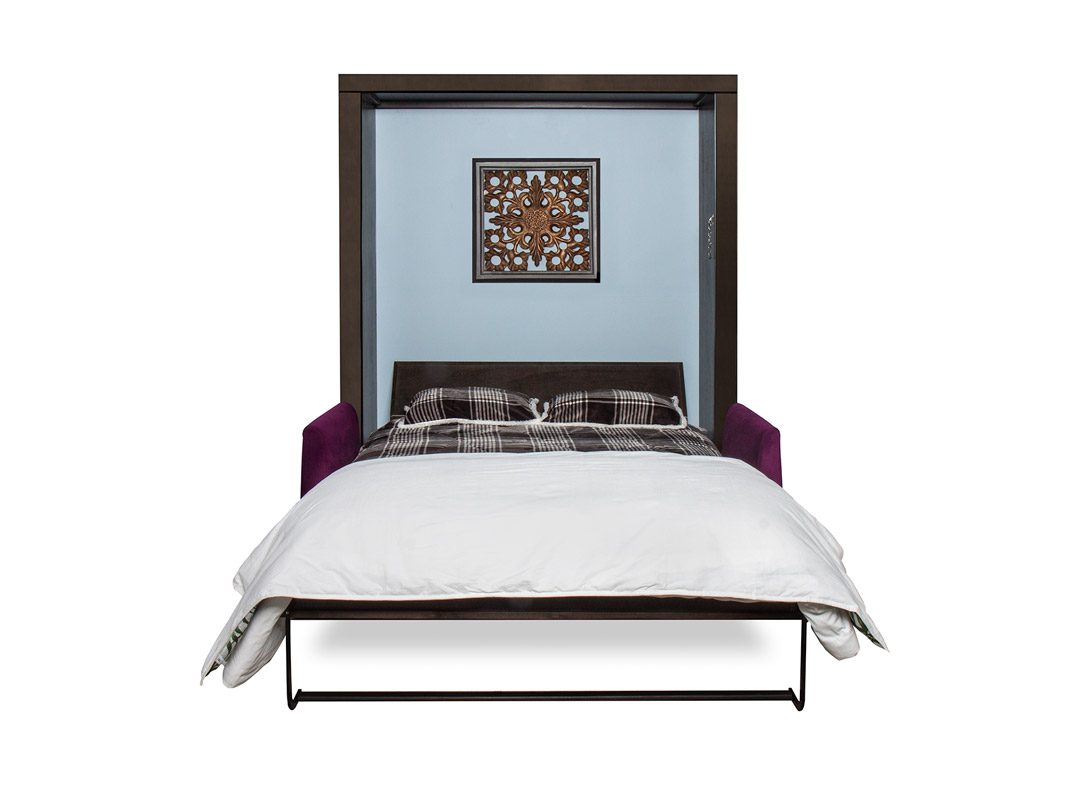
Among all space-saving furniture options, Murphy beds stand out as one of the most transformative. Also known as wall beds, Murphy beds allow a full-size, queen, or king mattress to fold neatly into the wall when not in use.
This single feature unlocks an entire room’s potential.
A Murphy bed allows a space to function as:
- A home office during the day and a guest room at night
- A living room that accommodates overnight visitors
- A studio or multipurpose room that stays open and uncluttered
- A bedroom that gains valuable floor space
Unlike sofa beds or futons, Murphy beds provide a real mattress and a true sleeping experience, making them suitable for regular use—not just the occasional guest.
Furniture That Does Double Duty
In small homes, every piece of furniture should earn its place. Multi-functional furniture combines two or more uses into a single, well-designed solution.
Popular examples include:
- Desks integrated into wall beds or cabinetry
- Storage benches that double as seating
- Coffee tables with hidden compartments
- Media centers that incorporate shelving and storage
These designs reduce the need for multiple bulky pieces, creating a cleaner, more intentional look.
Smart Workspaces for Compact Homes
Remote and hybrid work continue to shape how homes are used. In smaller spaces, carving out a dedicated office can feel impossible—unless the workspace is designed to disappear when it’s not needed.
Space-saving workspace solutions include:
- Fold-down desks mounted to the wall
- Built-in desks integrated with shelving
- Pull-out work surfaces hidden within cabinetry
- Murphy bed systems with integrated office components
These options allow you to maintain productivity during the day while reclaiming the room for rest or relaxation afterward.
Storage That Supports, Not Overwhelms
Clutter is one of the fastest ways a small home can feel smaller. Effective storage furniture doesn’t just hide belongings—it organizes them in a way that supports daily life.
Well-designed storage solutions often include:
- Vertical shelving that uses wall height
- Built-in cabinets that replace multiple standalone pieces
- Hidden storage integrated into seating or beds
- Custom layouts that match your habits and routines
When storage is intentional, rooms feel calmer, more spacious, and easier to maintain.
Custom vs. Ready-Made Space-Saving Furniture
Mass-produced furniture offers convenience, but it often falls short in small spaces where precision matters. Gaps, awkward proportions, and wasted inches can undermine even the best intentions.
Custom space-saving furniture provides advantages such as:
- Exact sizing for your room’s dimensions
- Designs tailored to how you actually use the space
- Higher-quality materials for long-term durability
- A cohesive look that integrates with your home
For homeowners planning to stay put, custom solutions often deliver greater satisfaction and longevity.
Small Spaces, Big Lifestyle Benefits
A smaller home designed with intention often feels more livable than a larger home filled with inefficient furniture. When space-saving furniture is used thoughtfully:
- Rooms transition effortlessly between uses
- Daily routines feel smoother and less stressful
- Guests are accommodated without disruption
- The home adapts as needs evolve
Rather than feeling constrained, small homes can feel curated, efficient, and surprisingly luxurious.
Start With One Room
You don’t need to transform your entire home at once. Many people begin by addressing the room that causes the most frustration—a cramped office, an unused guest room, or a cluttered living area.
Introducing space-saving furniture into just one room can dramatically change how your home functions. Often, that single improvement sets the tone for future updates.
Designing for the Life You Want
Big goals don’t require big homes. They require smart choices.
Space-saving furniture allows your home to support productivity, comfort, hospitality, and flexibility—no matter its size. In 2025, the most successful living spaces won’t be the largest ones. They’ll be the ones designed with purpose.